
AI Agents
Build and scale your agentic workforce
Automate complex work with agents in your business processes—with built-in orchestration, secure context, and auditability across your ecosystem. By embedding agents directly into the workflows that run your organization, operations transform and scale while maintaining control, compliance, and transparency.
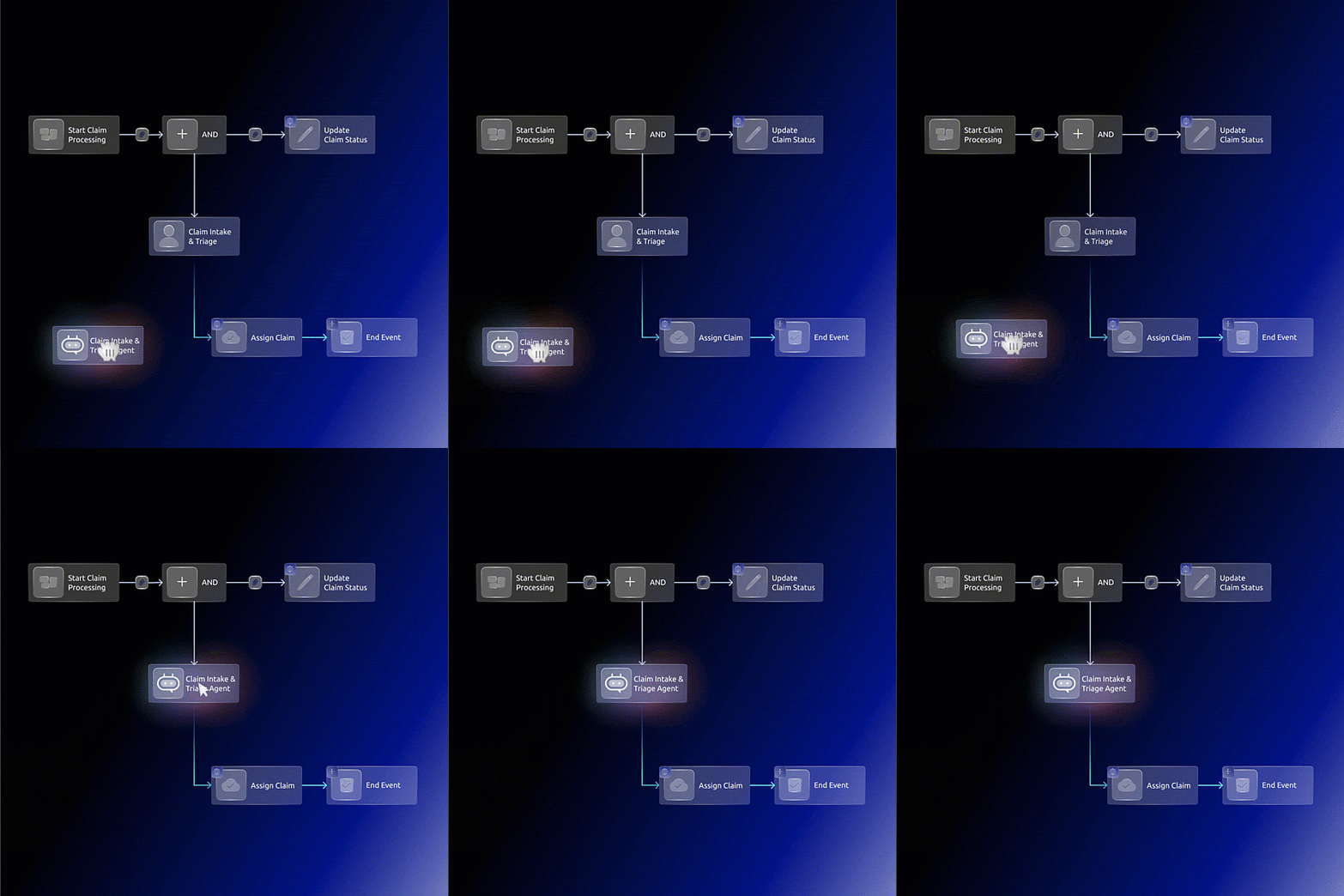
See AI agents in action
Appian AI agents are ready for enterprise-use.
Process is the control plane for scaling enterprise agents
Process defines what part of a job an agent is doing, what tools it can use, when it acts, and how its work fits into the broader flow of work. Agents automate complex, multi-step workflows with reasoning and autonomous action—but that value is only realized when they're integrated into the processes that govern how work gets done. This is Appian's agent approach.
Orchestration through process
Agents are embedded into process models and execute within the flow of work, moving across systems, people, and decisions — with actions and escalations managed in the same workflow.
Secure context store
Agents access secure, unified business context through data fabric. Model Context Protocol (MCP) enables seamless integration and orchestration for both Appian and third-party agents.
Transparency and auditability
Every agent execution is monitored, audited, and evaluated, giving teams the observability and accountability needed to scale.
Use cases for AI agents across enterprise workflows
Explore some of the core use cases where autonomous agents are multiplying workforce capacity and eliminating operational bottlenecks.
One platform, endless possibilities
The Appian Platform connects agents to your data, systems, and other automation tools. With one unified platform for your enterprise automation needs, the possibilities are endless.

Orchestrate your agentic workforce
Build, monitor, and deploy AI agents for repeatable enterprise use.
-
Design-bounded autonomy
Empower agents to act independently within strict, defined guardrails. Agents lets you quickly set specific goals, logic, and operational limits—ensuring your agents execute complex tasks safely without requiring manual oversight.
-
Run AI agents in orchestrated workflows
Embed agents directly into your end-to-end business processes. Powered by a unified data fabric, agents seamlessly connect with your existing systems and automation tools to make smart, context-aware decisions at every step of the workflow.
-
Observe and enforce runtime controls
Maintain complete visibility and command over your AI workforce. Monitor live agent actions, enforce compliance rules during execution, and trace every autonomous decision with comprehensive, enterprise-grade audit trails.
-
Operate securely and privately
With our private AI architecture, your data always stays within your compliance boundary. Appian never shares data with third parties or trains algorithms on your data.
-
Measure workflow outcomes
Track key performance metrics and evaluate how autonomous agents accelerate resolution times. Continuously optimize your processes based on actionable, data-driven insights in Process HQ.


Design-bounded autonomy
Empower agents to act independently within strict, defined guardrails. Agents lets you quickly set specific goals, logic, and operational limits—ensuring your agents execute complex tasks safely without requiring manual oversight.
Run AI agents in orchestrated workflows
Embed agents directly into your end-to-end business processes. Powered by a unified data fabric, agents seamlessly connect with your existing systems and automation tools to make smart, context-aware decisions at every step of the workflow.
Observe and enforce runtime controls
Maintain complete visibility and command over your AI workforce. Monitor live agent actions, enforce compliance rules during execution, and trace every autonomous decision with comprehensive, enterprise-grade audit trails.
Operate securely and privately
With our private AI architecture, your data always stays within your compliance boundary. Appian never shares data with third parties or trains algorithms on your data.
Measure workflow outcomes
Track key performance metrics and evaluate how autonomous agents accelerate resolution times. Continuously optimize your processes based on actionable, data-driven insights in Process HQ.
Join other companies who are using AI to automate real enterprise work
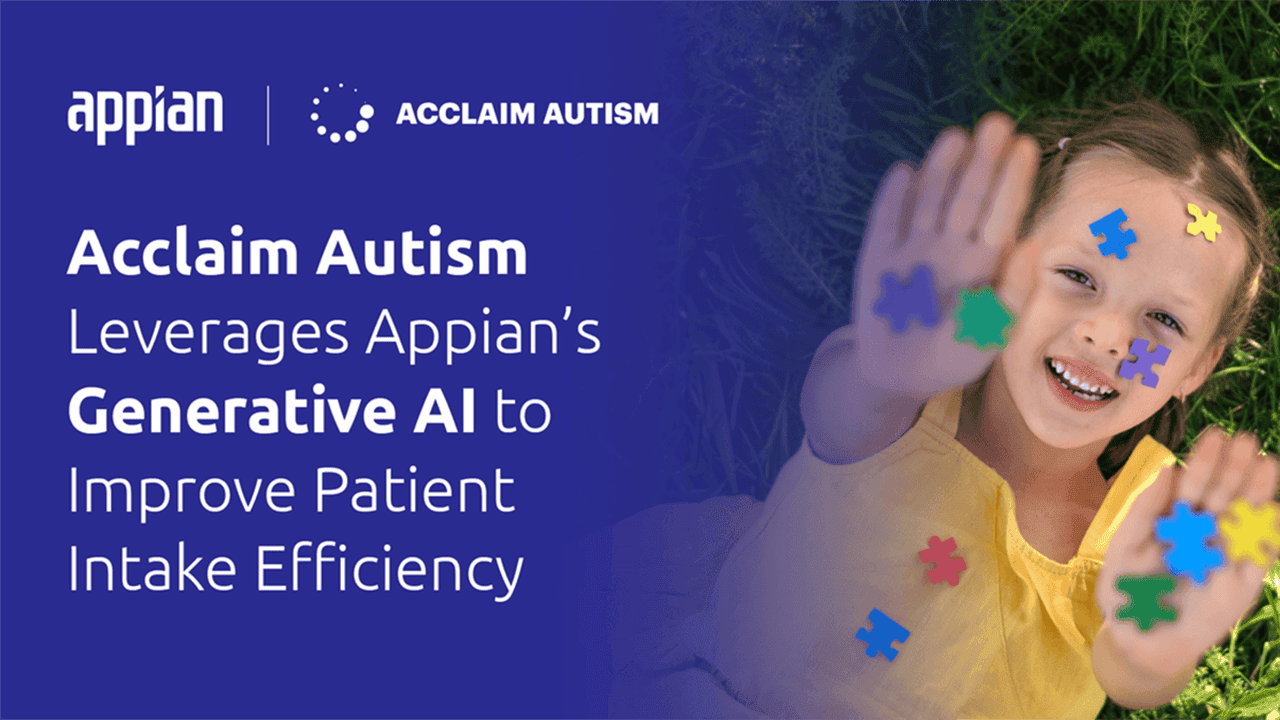
Patient intake
Acclaim Autism deployed AI agents in three weeks to cut patient intake time by 83%.
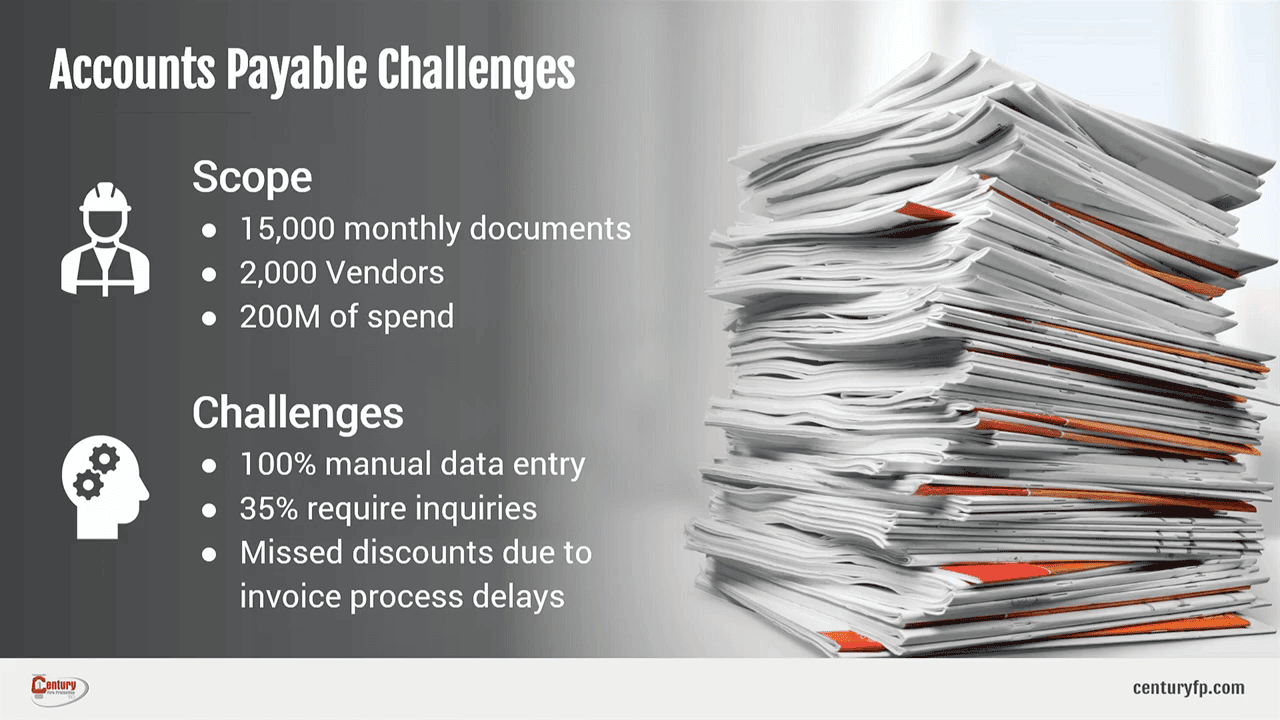
Accounts payable
Century Fire Protection automated accounts payable with AI, reducing invoice processing time by 36%.
AI chatbot
USF uses AI to save advisors 15 minutes of administrative work for every 30-minute student meeting.
Learn more about AI agents

Datasheet
Appian AI Agents

Datasheet
AI Agent Governance and Security
eBook
How to Select High-Value AI Agent Use Cases

eBook
How to Choose the Right Agentic Orchestration Model
Get the Newsletter
Process Pros
Sign up for new ideas to improve your processes and leverage the latest in AI.
AI Agents FAQs
AI agents in Appian are intelligent, goal-oriented participants embedded directly into enterprise workflows. They reason, take action, and influence outcomes as part of how work gets done, rather than operating independently or autonomously.
Unlike standalone AI agents, Appian agents participate in long-running, cross-functional processes that maintain shared state, coordinate decisions across systems, and preserve accountability across teams and time. This allows organizations to apply AI safely to real operational work ,not just isolated tasks.
Many autonomous AI agent approaches struggle in enterprise environments because they lack shared context, consistent governance, and predictable execution. As agents scale, oversight increases, exceptions multiply, and productivity gains erode.
Appian takes a bounded autonomy approach. AI agents are empowered to reason and act—but only within explicit process guardrails that define when autonomy is appropriate, how decisions affect downstream work, and where escalation or human review is required. This enables applied autonomy without sacrificing control or trust.
Appian AI agents operate directly within business processes, functioning as intelligent decision or action nodes inside workflows. Processes provide shared state, sequencing, exception handling, and coordination between agents, automation, and humans.
Agents reason over business objects exposed through Appian’s Data Fabric, which provides a unified, governed view of enterprise data across systems (without data migration). Agents inherit the same permissions, security rules, and auditability as human users, ensuring context-aware reasoning with enterprise trust.
Security and governance are enforced by design in Appian. AI agents operate under the same enterprise controls that govern applications, processes, and data, including role-based access control, environment isolation, lifecycle management, and execution logging.
Every agent action is traceable and auditable, with full visibility into inputs, outputs, and process context. Governance is proactive rather than reactive (embedded into how agents are designed, deployed, and executed) supporting regulatory, legal, and internal compliance requirements.
Appian supports both human-in-the-loop and human-on-the-loop oversight models. AI agents can request approvals, route decisions for validation, or escalate exceptions based on defined rules and risk thresholds.
Humans remain accountable by design, with clear authority over when agent decisions are accepted, overridden, or reviewed – ensuring AI augments human judgment rather than replacing it.
AI agents follow Appian’s standard enterprise application lifecycle – moving from development to testing to production with appropriate controls. Built-in testing, monitoring, and troubleshooting tools support continuous improvement as agents scale across processes.
Because agents operate inside measurable workflows, organizations can directly track impact on cycle time, throughput, cost reduction, and decision quality – turning AI from experimentation into sustained operational value.
Be part of the process
Join the world’s leading organizations using Appian process orchestration.
