
The Appian Platform
Control your process. Own your operations.
Unify AI, data, and process automation on a single platform.


Purpose-built for process
True enterprise agility doesn't just come from your technology—it comes from optimizing the processes that connect it.
From onboarding and procurement to regulatory reporting, Appian orchestrates your entire ecosystem around the one thing that drives real business value: your operational processes.
Designed for enterprise
The Appian Platform meets strict global standards—keeping applications secure, available, and compliant while you innovate at scale.

Turn complexity into competitive advantage
Appian handles complex, regulated processes that other tools can’t, providing
the intelligence, automation, and controls needed to truly transform your operations.
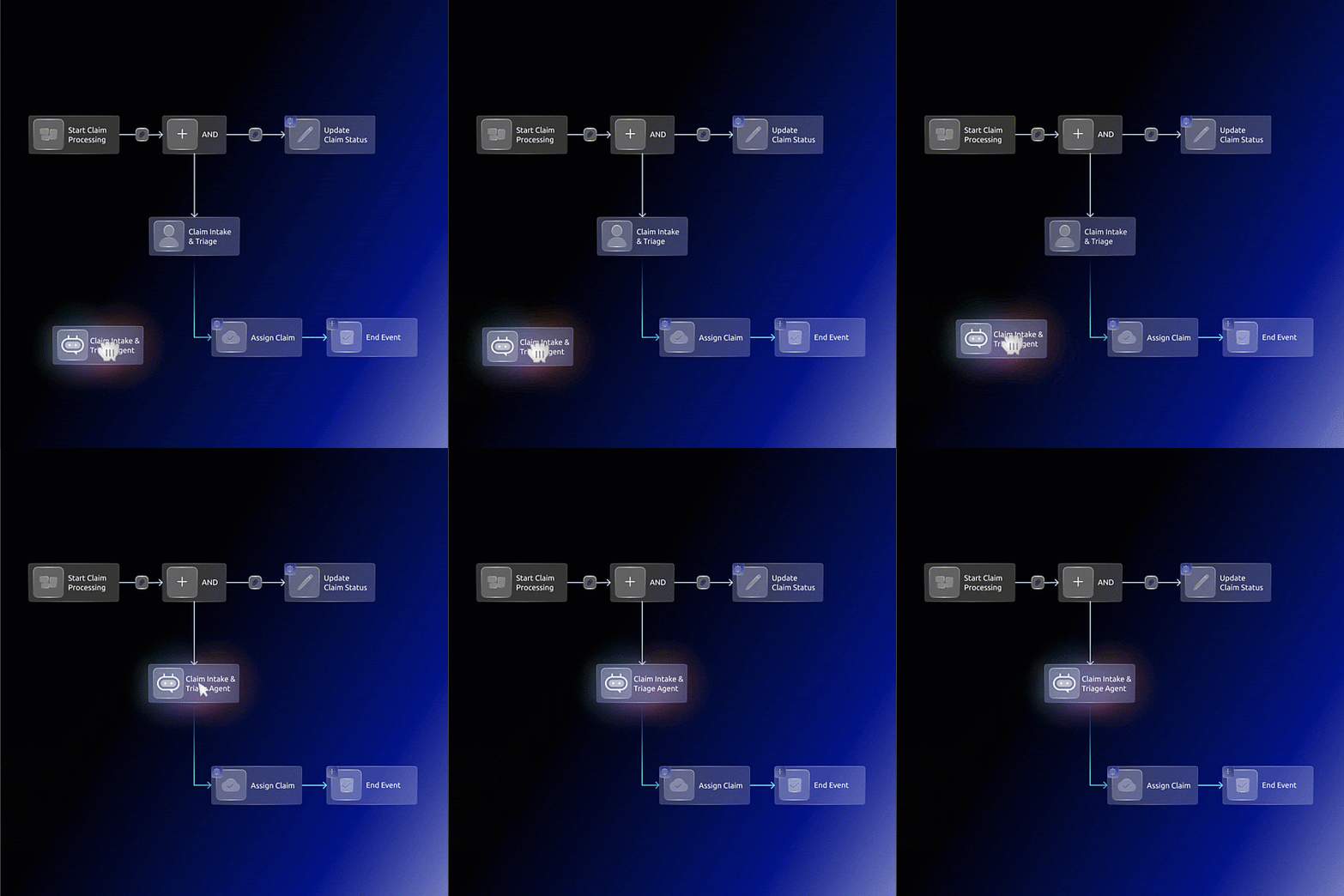
Orchestrate your digital workforce
Connect AI agents to real work by embedding them in your business processes—with context, auditability, and orchestration across your ecosystem.
Appian customers get results
8 month payback
on initial investment
$12.6M annually
in reclaimed staff time
25% improvement in
enterprise innovation
One unified platform. No bolt-ons.
-
Process orchestration
Simplify global operations with seamless coordination of systems, agents, and people.
-
Unified data
Give employees and AI agents a secure way to access and update information across your ecosystem—without data migration.
-
AI
Embed AI in your workflows and interfaces—with every AI action governed, controllable, and tied to business impact.
-
Modernization
Extend core systems, consolidate applications, and reimagine processes to meet your unique business needs.
-
Process intelligence
Access, analyze, and report on process and business data.


Process orchestration
Simplify global operations with seamless coordination of systems, agents, and people.
Unified data
Give employees and AI agents a secure way to access and update information across your ecosystem—without data migration.
AI
Embed AI in your workflows and interfaces—with every AI action governed, controllable, and tied to business impact.
Modernization
Extend core systems, consolidate applications, and reimagine processes to meet your unique business needs.
Transform the way you work
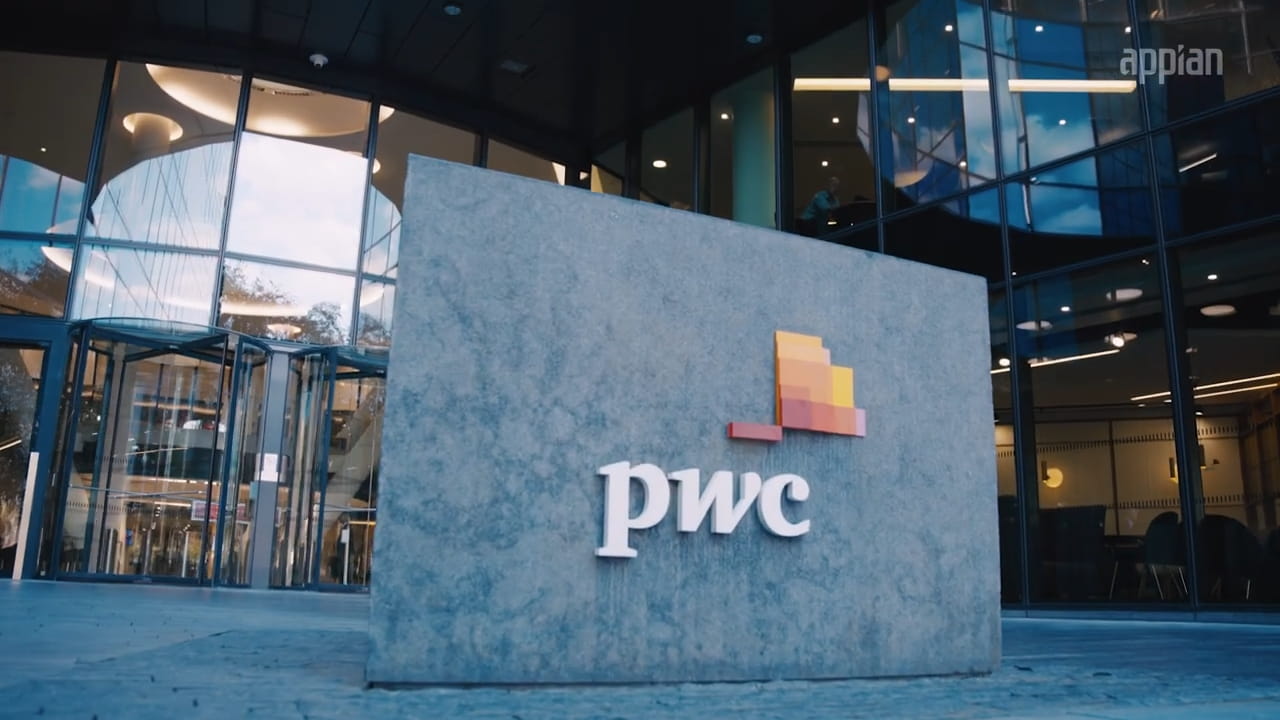
Insurance
PwC
Increased claims handling efficiency by 30%, resulting in faster claim resolution.

Financial Services
Options Clearing Corporation (OCC)
Raised process transparency and digitized documentation for smoother audits.

Public Sector
Texas Department of Public Safety
Automated the contract award process end to end.
Related resources

Analyst Report
A Leader in Business Orchestration and Automation Technologies (BOAT)

Analyst Report
A leader in Everest Process Orchestration PEAK Matrix 2025

Study
The Business Value of Appian
FAQs on the Appian Platform
Appian is an AI process automation platform. For over 25 years, we have helped industry leaders drive strategic outcomes, like faster processes, increased workforce productivity, accelerated innovation, and stronger competitive advantage.
The Appian Platform supports these goals with process orchestration, automation, and intelligence. Our customers design their processes using tools like process models, deveopoment, and data fabric. They automate tasks with built-in AI and robotic process automation. And they continuously improve processes using process intelligence software with process mining and AI recommendations.
Appian automates complex processes in any industry. While organizations use Appian for a wide range of use cases, these are some of the most common:
Public sector:
Financial services:
Insurance:
Life sciences:
Appian works across industries for any complex process.
Enterprises use Appian to secure long-term business advantages with better end-to-end processes. Some want greater productivity. Others need to support compliance. Still others focus on bringing products to market faster. These improvements drive outcomes like greater customer retention and a stronger competitive advantage.
Appian software connects workflows, unifies data, and optimizes processes to realize these outcomes. Here are a few of Appian’s main capabilities:
Orchestrate and automate anything with integrated workflows, RPA, and AI.
Unify your enterprise data with a data fabric that makes it accessible to humans and AI.
Modernize legacy applications and extend the value of core systems.
Improve user experience across web and mobile devices and in browsers.
Gain visibility into how your processes are performing with process intelligence, so you can continuously meet and surpass your goals.
Gartner ranks Appian as a leader in Business Process Orchestration and Automation Technology (BOAT).
Here are just a few of the business benefits you can expect to see from Appian:
Higher profits. Faster, more effective processes help you drive more innovation and get new products to market faster.
Performant processes. Automation and orchestration speed things up. Process intelligence enables a virtuous cycle of continuous improvement.
Greater agility. Meet changing market demands fast by adapting quickly with spec-driven development.
Better compliance. Keep processes aligned with regulations to avoid risks and penalties. Make changes quickly to meet new regulatory requirements.
Fewer errors. Offloading repetitive tasks to automation tools means more accurate work.
Reclaimed staff time. Increase the productivity of your workforce without adding headcount.
Learn more about the outcomes Appian customers are seeing in the real world or read more about the business value of Appian.
AI serves as a native layer within the platform's architecture to automate business logic, process complex data, and accelerate development. Rather than acting as a standalone tool, AI is embedded directly into the workflow engine and data layer to ensure security and scalability.
The following four pillars define how this technology operates within the platform:
- Generative AI (reasoning and content): Integration objects connect the process engine to LLMs. Developers use a call integration service to send data to an LLM, which returns a structured response (summary, drafted email, etc.) stored as a variable for the next step. Processing is stateless: data isn't retained by the provider or used to train the model.
- AI agents (autonomous action): Agents are design objects that execute multi-step tasks by selecting the right tools for the job. They depend on data fabric for context, so terms like "Customer" or "Order" mean the same thing across fragmented systems. From there, agents use Model Context Protocol (MCP) to securely reach external systems like Snowflake—querying data or triggering actions. For more complex work, a lead agent can coordinate specialized sub-agents, either within Appian or in external systems like Google Vertex AI, inside a single governed process.
- Environment-wide policies guard against prompt injection and data leakage, and any low-confidence action triggers a human-in-the-loop escalation that routes the decision to a person for review.
- Practical machine learning (extraction and prediction):
- Document processing. Users train a local model on sample documents and the platform then auto-extracts fields (invoice numbers, dates) into Records.
- Process prediction. Historical data fabric analysis surfaces real-time indicators, like the likelihood of missing a deadline.
- AI-augmented development (Composer): AI is applied at design-time through Composer, which turns business requirements—natural language or existing documents like Word, text, or PDF files—into working Appian applications. Composer first interprets the underlying logic and workflows to produce a visual, interactive plan (workflows, personas, data models, testable UIs) that business and IT teams validate before any build begins. Composer then generates the application using model-driven development on Appian SAIL so the output is standardized, governable, and maintainable.
The Appian Platform offers process orchestration, automation, and intelligence capabilities that include but are not limited to:
- Business process automation
- Process orchestration
- AI
- AI agents
- AI-augmented development
- Enterprise modernization tools
- Data fabric
- Process intelligence
- Process modeling
- Robotic process automation (RPA)
Ready to talk?
See how the world’s fastest-growing organizations use Appian for process orchestration.