
SUPPLY CHAIN AND PROCUREMENT
Enterprise AI Automation for Supply Chain and Procurement
Made for the Autonomous Business Era.Connect every handoff across supply chain and procurement so Al has the context to understand, the control to decide safely, and the process to act. Spot issues sooner and reduce risk without disrupting core systems.

50%
Faster logistics execution
4x
Faster order provisioning
$80+
First-year cost avoidance
40%
Faster procurement cycles
Core systems run transactions.
Appian runs the work across them.
When work crosses ERP, procurement, logistics, finance, supplier, and legacy systems, the handoffs are where visibility breaks, decisions stall, and risk compounds.
Appian helps organizations overcome

Operational blind spots
Connect inventory, demand, shipment, and supplier signals so teams see issues sooner and act with shared context.

Process debt
Replace email, spreadsheets, PDFS, and swivel-chair work with governed workflows that keep exceptions and approvals moving.

Supplier & execution risk
Coordinate issues, disruptions, and escalations across teams with clear ownership, control, and auditability.
WHY THIS MATTERS NOW
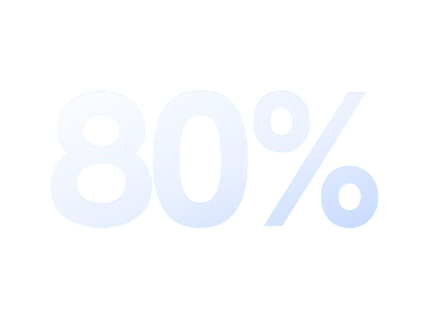
Executives expect autonomous business to dominate by 2030.
The race is no longer to adopt Al. It is to operationalize it with the context, governance, and execution required for enterprise-scale autonomy.
Gartner, May 2026.
Process-led autonomy. Human-led decisions.

Process defines the work
Agents act as steps inside a modeled workflow, not freeform prompts. The process decides what can happen, and when.

Agents execute the routine
Closeout, data entry, validation, and vendor research run unattended. Staff hours return to the work that needs people.

People hold the decisions
Agents prepare, check, and route. Award decisions and signatures stay with warranted officials.

You set the level of autonomy
Start with recommend-only. Expand to unattended execution where the process and the evidence support it.
The supply
continuity model
Make Supply Chain and Procurement Work as One.A closed loop of insight, control, and action across the end-to-end value chain without replacing the systems that already run the business.

Proof of performance
Appian helps organizations replace fragmented manual coordination with governed, cross-system execution.
JLR
NASA
VASSS
Scania
The Carlyle Group

Appian is a Gartner® Magic Quadrant™ Leader

A Leader in the 2025 Gartner® Magic Quadrantᵀᴹ for Business Orchestration and Automation Technologies (BOAT)

A Customers’ Choice in the 2025 Gartner® Peer Insights Voice of the Customer for Enterprise Low-Code Application Platforms
Fast to value, built to scale
-
Orchestration above systems of record
Boost efficiency by connecting AI and data across core systems.
-
Unified data fabric
Real-time, not batch
-
Visibility into action
See it, then act on it with process intelligence.
-
Secure, governed AI
Agentic, but accountable.


Orchestration above systems of record
Boost efficiency by connecting AI and data across core systems.
Additional resources

Webinar
Supply Chain Outlook for 2026

eBook
Top 5 Al Use Cases in Supply Chain

Guide
The Complete Guide: Supply Chain Automation
Frequently asked questions
Common questions from supply chain, procurement, and operations leaders evaluating orchestration platforms.
It is the layer that connects the work happening across your ERP, sourcing, logistics, and finance systems. It routes exceptions, enforces ownership, and automates handoffs so nothing falls through the cracks
Most platforms do one of three things. Integration tools connect systems. Orchestration and planning platforms coordinate work inside their own domain. Low-code tools let you build. The work that spans supply chain and procurement needs all three at once, on one architecture.
Appian does not replace your ERP. It orchestrates and unifies the spans your ERP, sourcing, and other systems of record. That is coordination they were never built to handle
Two differences. First, independence: Appian is not owned by a spend suite, so it orchestrates across Ariba, Coupa, SAP, Oracle, and everything else you run without favoring one network. Second, scope: sourcing suites orchestrate the transaction, from request to order to payment. Your disruptions do not stop there. A quality escape, a customs hold, or a stopped line has no purchase order attached, and Appian coordinates that work too. We are not replacing your sourcing suite. We are extending it across the operation, with the flexibility to build what your suite does not cover and connect what it cannot reach, so AI has the context, process, and governance to act.
Appian solutions typically go live in weeks, starting with a single high-value process and expanding from there instead of a multi-year platform rollout. With the Appian Guarantee, your first project is delivered in 8 weeks, guaranteed.
Al agents operate inside governed, auditable processes with human oversight at decision points, so every action is tracked and accountable. It is not a black box.
Yes. Appian is named a Leader in the Gartner Magic Quadrant for Business Orchestration and Automation Technologies, the Forrester Wave for Digital Process Automation, and rated a Leader by G2.
Start with high-friction workflows that cross teams and systems, such as supplier onboarding, procurement intake, invoice exceptions, disruption response, and order or inventory issue resolution.
No. Appian complements those systems of record by orchestrating the workflows, exceptions, data, approvals, decisions, and actions that span across them. You keep the core systems you rely on and use Appian to close the execution gaps between them.
Use Appian when the work crosses multiple systems or teams, changes frequently, requires complex exception or case handling, or needs Al and data from several sources under one governance model. Native workflow is a good fit when a process stays inside one system. Appian is strongest when the execution gap is between systems.
Make supply chain and procurement work as one.
Start with one process. First project live in 8 weeks, guaranteed.
