






Legacy Modernization
Modernize Legacy Applications with AI
Appian connects the speed of AI with the reliability of a managed platform.

Transform your business.
AI writes your application with full traceability while Appian’s managed platform keeps it secure..
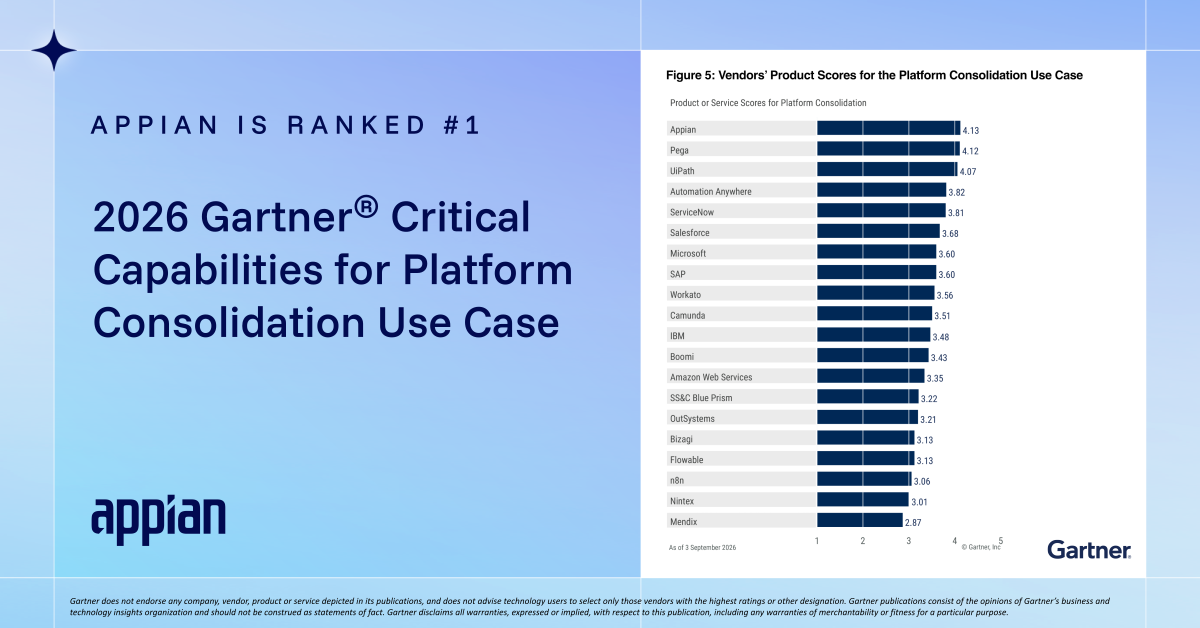
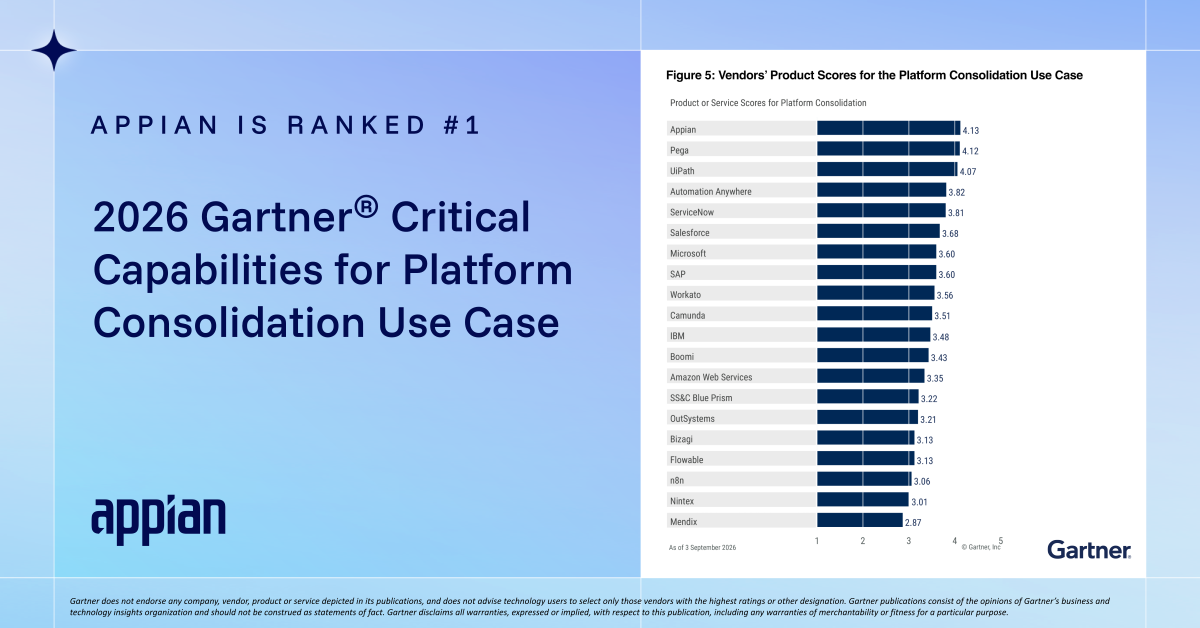
Built for mission-critical processes, the Appian platform is your ideal destination for enterprise applications.
Consolidate legacy applications on a future-ready foundation
Code generation tools alone struggle to build critical systems. By combining AI development with a managed platform, you get the support necessary to quickly develop reliable, maintainable applications that scale.

Build the future, not more tech debt
Consolidate legacy applications.
Rationalize legacy systems fast. Use AI to extract business logic and rapidly build modern solutions.
Build the right process.
Align your teams before you build. Use AI to create collaborative plans and workflows so business and IT agree on the solution.
Accelerate delivery.
Maximize developer efficiency with AI-assisted spec-driven development, combining AI speed with traceability and governance.
Show Modernization ROI.
Map modernization to business value from day one with process intelligence built in.
With Appian AI, no modernization project is out of reach

Aviva
Consolidated 22 legacy systems into one Appian application, delivering 9x faster customer service and 40% cost savings.

The United States Air Force
Replaced 7 legacy systems, saving more than $80 million in year one and supporting 5,000 active users.

Neuberger Berman
Eliminated 4,000 spreadsheets and integrated over 100 systems, supporting $50B in investments and $45B in investor transactions.
Accelerate legacy modernization with AI
Reduce long project timelines and failed deliveries with a methodology designed to deliver business value fast.
-
Extract
AI ingests rules and logic from text, images, and legacy documentation to create specifications and interactive application plans.
-
Collaborate
Visual plans outline workflows, data models and user experiences, allowing business and IT to collaborate and align before you build.
-
Implement
Use AI to accelerate solution delivery by authoring auditable, standards-compliant applications, with developer supervision.
-
Reimagine
Continuously modernize workflows with enterprise applications that are easy to modify, extend and scale on a managed platform.


Extract
AI ingests rules and logic from text, images, and legacy documentation to create specifications and interactive application plans.
Collaborate
Visual plans outline workflows, data models and user experiences, allowing business and IT to collaborate and align before you build.
Implement
Use AI to accelerate solution delivery by authoring auditable, standards-compliant applications, with developer supervision.
Reimagine
Continuously modernize workflows with enterprise applications that are easy to modify, extend and scale on a managed platform.
Scalable, repeatable modernization services
Appian provides portfolio-scale modernization services with our Legacy Modernization Factory — an AI-assisted, factory-based delivery model that lowers risk and accelerates delivery.

Learn about Appian for legacy modernization
Whitepaper
Modernizing Your Application Portfolio with AI App Generation
On-demand webinar
Application Modernization: Navigating the Pathways to Success

Datasheet
Appian for Legacy Modernization
Legacy Modernization FAQs
Legacy application modernization updates how organizations run operations supported by aging software, without requiring a high-risk rip-and-replace of core systems. Instead of spending years rebuilding underlying systems of record, modernization connects existing databases, mainframes, and applications into unified workflows. This eliminates manual swivel-chair work and allows new automation and AI capabilities to operate across legacy environments.
These strategies differ in how much underlying architecture changes:
Rehosting (lift-and-shift): Moves existing software to cloud infrastructure without changing application code.
Replatforming: Moves applications to cloud environments with minimal optimizations, preserving core code.
Refactoring: Restructures backend code to improve performance and maintainability while preserving functionality.
Rebuilding: Scraps the legacy codebase to build an application from scratch.
Appian provides a practical alternative: an agility layer that overlays existing systems of record. Organizations orchestrate workflows across legacy backends immediately, modernizing operations without risky cutovers.
An organization should modernize when maintenance costs, security risks, and technical debt prevent operational change. Legacy interfaces also block new technologies: people work around decades-old systems, but AI agents cannot. When routine process updates take months, audits across disconnected systems become difficult, or maintenance contracts rise steeply, modernizing the workflow delivers higher returns than continued upkeep.
Traditional code migration tools attempt automated line-by-line syntax translation, which risks replicating outdated architectures, bugs, and technical debt. AI-assisted modernization on Appian uses AI to interpret documentation, process flows, and requirements into functional specifications. Developer agents then build declarative, maintainable application objects on a managed platform, transferring underlying security, dependency, and compliance risks to Appian.
Yes. Appian modernizes operations without downtime by deploying as an agility layer over existing core systems. Staff work in a unified interface that orchestrates tasks across mainframes, ERPs, and databases while those underlying systems remain active. Organizations update and consolidate workflows incrementally, mitigating the operational disruption and risks of a full cutover.
Appian eliminates data migration risk by connecting data where it lives rather than moving it. The Appian Data Fabric unifies records across legacy databases, ERPs, and mainframes into a virtualized model. It maintains centralized security policies while Appian updates source systems in real time with live-writes, enabling operational use cases without maintaining complex ETL pipelines.
The first 30 to 60 days focus on portfolio assessment and foundational delivery through the Legacy Modernization Factory. Appian Customer Success and certified partners establish:
Portfolio rationalization: Prioritizing legacy applications by operational impact and compliance risk.
Factory foundation: Establishing architecture, deployment pipelines, and testing guardrails.
Initial workflows: Modernizing two to four reference workflows to validate integration and prove delivery speed.
Appian is your modernization destination
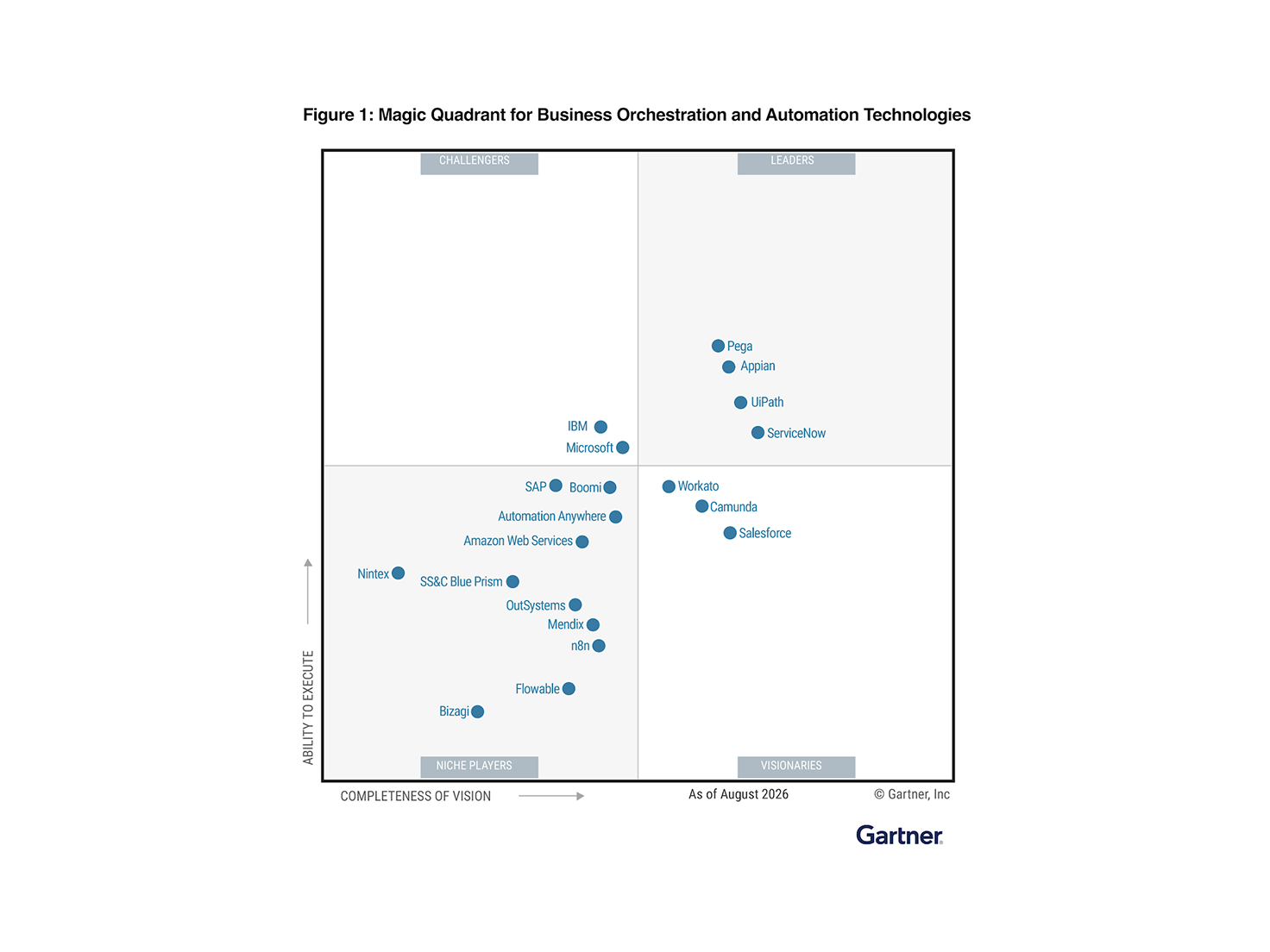
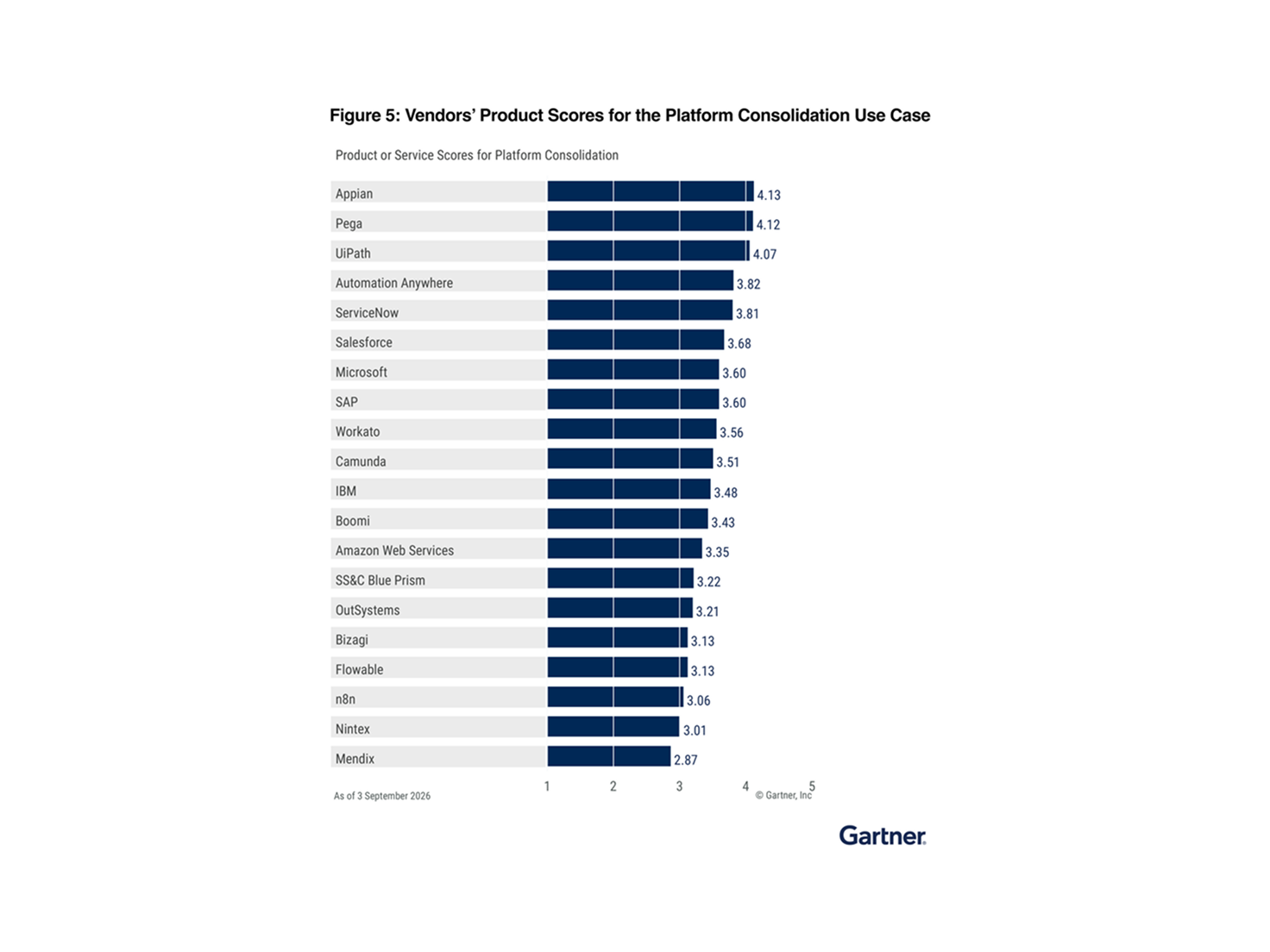
Partner with a proven leader in enterprise modernization.
