
-
Platform
-
Solutions
-
Customers
-
-
Resources
-
Company







Next time, try CTRL + K to open the search
Imagine an agent drafting a recommendation for an insurance claim. Value will depend on what happens next. Did it save the reviewer time or did it lead to more rework? Did the claim close faster than the average last quarter? These questions can’t be answered by looking at the agent alone, because the answers sit in the work around the agent.
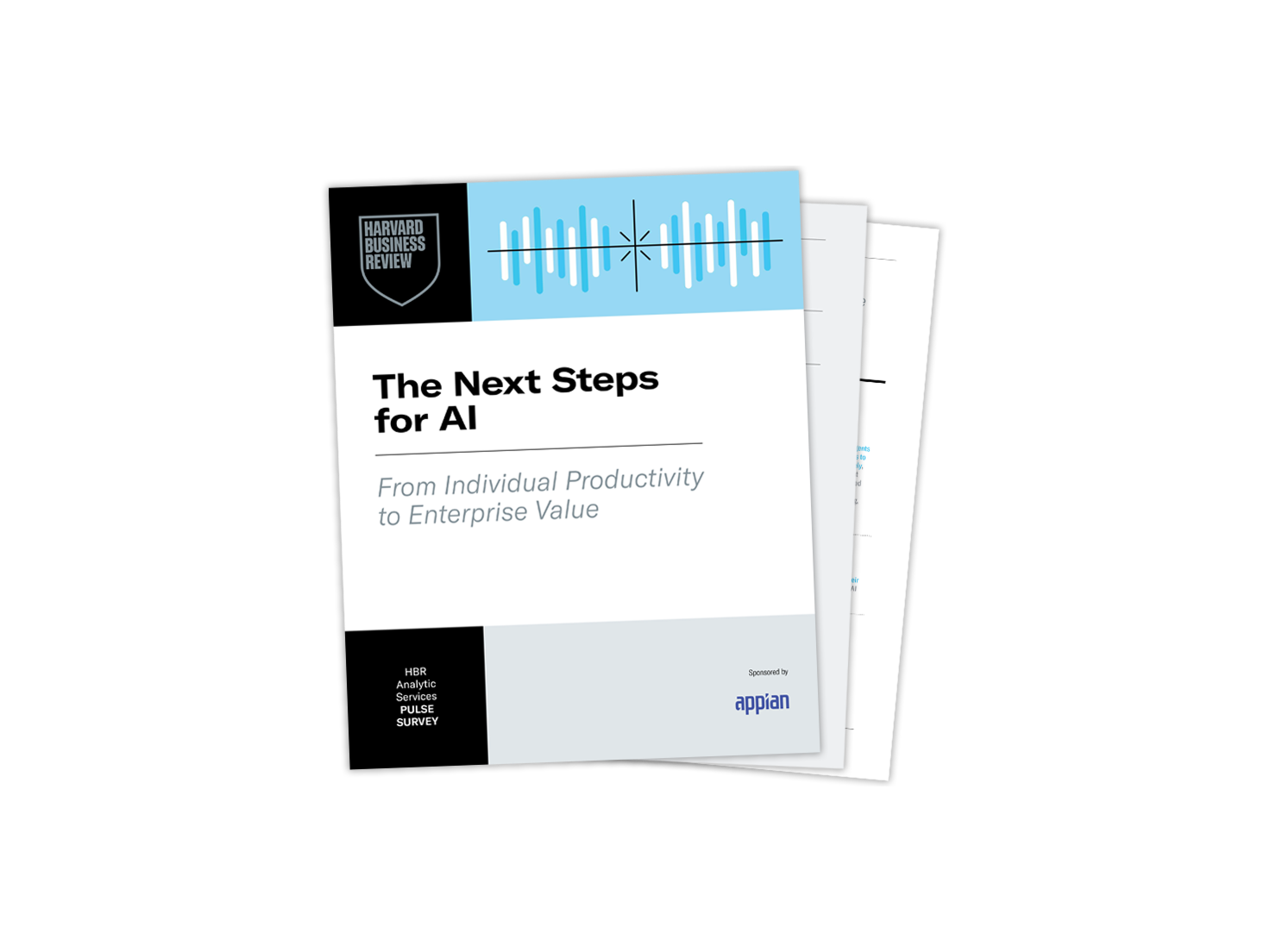
The process the agent sits within is where value is measured, but many organizations have yet to tie agent behavior to process outcomes. In a Harvard Business Review Analytic Services study sponsored by Appian, just 16% of organizations reported a high degree of measurable value from AI.
This leaves three core questions:
Which agents are running, and are they keeping within policy?
Is their work leading to desirable outcomes?
Are the outcomes they are driving worth what they cost?
Organizations look to control planes to answer all three of these questions. However, most only answer the first one.
Where most control planes stop
Control planes commonly focus on technical controls. They keep an inventory of agents, enforce permissions and guardrails, and track costs.
They see what an agent did, but struggle to bring the broader case into view. This makes it difficult to show whether a required approval happened, whether the case outcome was improved, or whether policies were followed.
Agents create value—and risk—in the work they take part in. So a control plane for operations has to see that work. That requires controls, orchestration, and intelligence.
Controls: Keep every agent in bounds
Control starts with knowing what’s running, no matter where the agent is built. Each agent has its own identity, with every action recorded and traceable.
Teams should be able to choose which models agents use, check what data agents access and return, and stop an agent automatically when it crosses a threshold. They should be able to prove agents work as intended, with evaluations assessed after every change, and compliance evidence easily made available whenever auditors ask.
Controls can be strengthened based on where the agent runs. Inside a process, an agent can’t mistakenly skip approvals. This allows hard rules to be strictly coded, mitigating risk and improving automation outcomes.

Orchestration: Coordinate agents and digital workers
Orchestration decides what happens next. When a process decides, the steps are consistent and repeatable. The work is fast, cheap, and auditable, but anything unexpected causes issues. When an agent decides, open-ended work becomes manageable, but every step adds to cost and latency, and outcomes can vary case by case.
Process-centric orchestration is the pragmatic approach. Rules automate the predictable steps, and agents only work the steps that need reasoning. Processes can call agents, and agents can call processes. An agent assessing a loan can hand the debt calculations back to the process because the mathematical formulas don't require reasoning, while a loan officer still exercises judgement to make the final decision.
Agents from across vendors should be part of the same process, connected through MCP, APIs, or A2A. And if an agent fails or is stopped, its task can go to a person, a rule, or another agent.
Intelligence: Measure business value
A head of claims wants to know whether a triage agent has made claims close faster, decreased cost per claim, and whether the agent routes claims more accurately than adjusters did.
Every agent must be tied to the claim it worked on, regardless of platform. Then it can be measured on the KPIs the business tracks, such as cost per case and cycle time.
Measurement will lead to action. When most runs follow the same path, that step can become a rule rather than an AI agent. Before making that change, teams should be able to simulate its effect on cost and cycle time before it is built and deployed
With that view, leaders can scale agents that pay off, fix or retire ones that don't, while showing the business the returns on AI spend.
All three working together
Take customer onboarding at a bank, with agents from two vendors in the same process. One verifies the customer’s identity documents. The other assesses risk.
Controls. Both agents have their own identities and audit trails, and use only approved models. Guardrails ensure their outputs are safe and aligned to policies.
Orchestration. The process passes verified documents to the risk agent, which uses rules to perform necessary checks. The agent sends the package to a reviewer for approval. If the agent fails, the case goes to a person.
Intelligence. The bank sees what onboarding costs per customer and how long it takes, and which agent steps could become rules.
How Appian is building toward this
These principles shape the control plane Appian is building for agents. If you're running agents across several platforms and want to experience the vision of Appian’s control plane, apply for the early adopter program by speaking with your Appian account team.
Learn more about control plane.
